

It’s Tuesday afternoon and I set out to read one of the chapters in Martin Meredith’s book ‘The State of Africa.’ The title of this particular chapter struck me hard as I kept wondering what it was about. This being a book about the political history of Africa, I sensed pure darkness in this chapter and didn’t expect any good news.
I begun to read and indeed bit by bit, Meredith systematically unveils this darkness and as I read on tears roll down my eyes at the level of brutality in this chapter…………………………….
It all begins with Leopold II of Belgium who was an ambitious and greedy man who tried to interest his country into colonization but they were not forthcoming as they viewed it as risky business. Leopold assigned Henry Stanley Morton, a great explorer in East and Central Africa and gives him a task to identify for him areas around the Congo River which would become his property. Stanley, who was nicknamed ‘Breaker of Rocks’ because of his cruelty and brutal punishments did the job so well and persuaded over 400 African chiefs in this area to sign treaties surrendering their land and submitting to the authority of Leopold II.
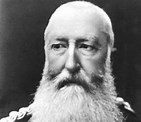
In 1885, Leopold II finally received International approval as the owner of the Congo Free state an area that spanned over 26,000,000m2. The first years were not profitable and administration of this state was difficult with only a handful of people managing.
Leopold’s main purpose of acquiring Congo Free State was to amass a huge fortune. His hope was in Ivory and therefore sent out his team of ruthless men for hunting expeditions for Ivory, these pounced on villages, killing some people that were not cooperative.
During this time, the demand for wild rubber rose as it was used to make car and bicycle tyres. Leopold saw this as an opportunity in Congo’s equatorial forests and introduced a system of slave labor, imposing quotas on villagers who had to fulfill their quotas. Those who failed to fulfill their quotas were flogged, imprisoned and even mutilated, their hands cut off. Thousands were killed for resisting Léopold’s rubber regime; thousands more fled their homes. Congo’s export for rubber increased from 100 tons in 1890 to 6000 tons in 1901.
The increase in rubber production was impressive but the means used were extremely cruel and thus provoked uprisings and revolts and uprisings and revolts and left behind a landscape of burned villages, terrified refugees, starvation and disease. Leopold’s rule came to depend on the Force Publique, an army composed of white officers and African auxiliaries, notorious for their brutal conduct.
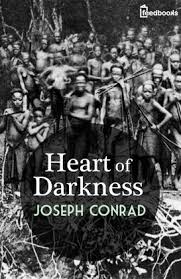
By the end of his twenty-three year reign as ‘King-Sovereign’, Léopold had become one of the richest men in Europe. But the Congo had lost several million people, possibly as many as 10 million, half of its population. It’s not a surprise that Joseph Conrad, a great writer of the time described the activities of Léopold’s Congo Free State as ‘the vilest scramble for loot that ever disfigured the history of human conscience’.
Congo’s rubber terror raised a public outcry from the International community who were concerned with gross abuse of human rights in the Congo and forced Leopold to handover management of this empire to the Belgium government. Congo officially became a colony of Belgium in 1908.
The question that ends today’s story is; did the situation of the Indigenous Congolese change with the exit of Leopold from Congo or was it a mere change of guard and a continuation of the systems and policies.
Keep glued to my blog and as we continue to unveil the Political history of the Congo.
 Christinek